rTMS in Addiction Rehabilitation: Our Pilot Study Results (Part 1)
A small pilot study found lower craving, anxiety and depression scores when rTMS was added to residential addiction treatment. Here is what we found, and what it does and does not show.
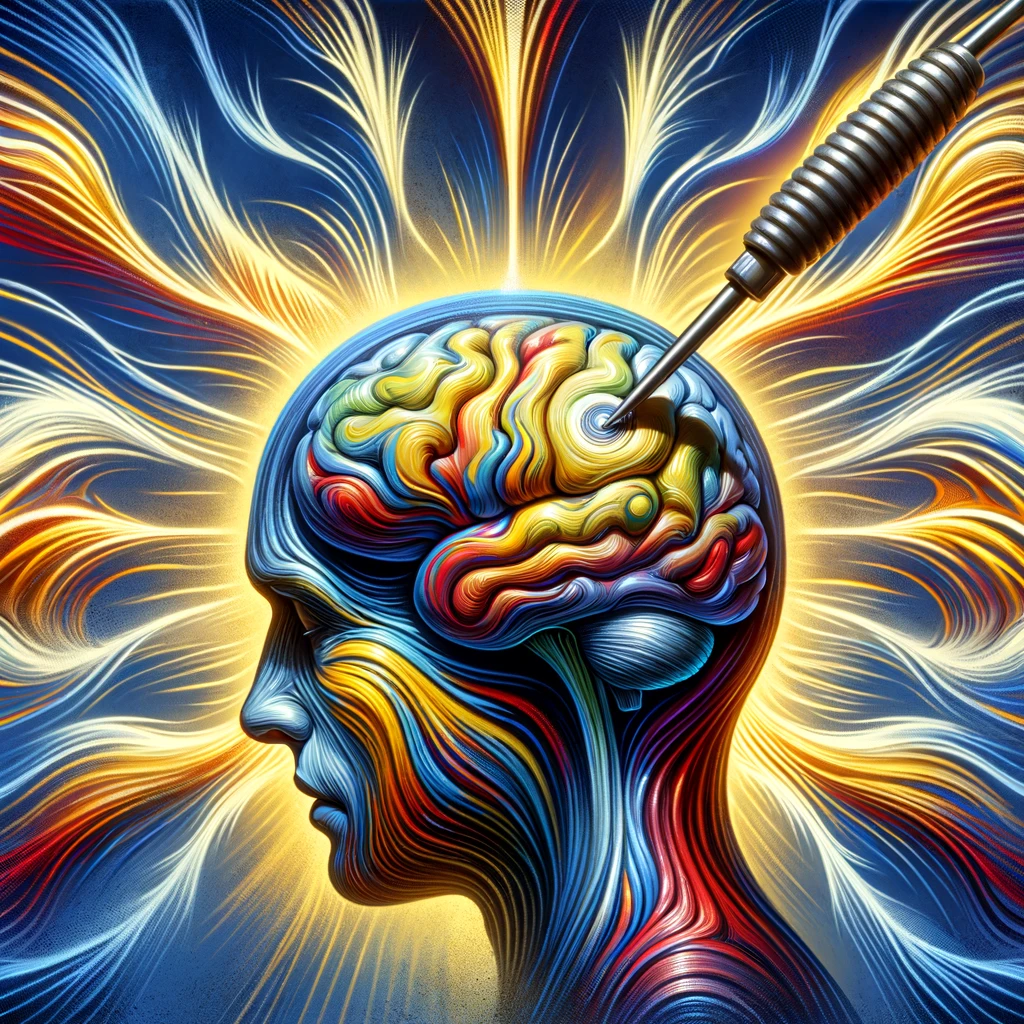
People in addiction treatment often also live with depression and anxiety. These symptoms can make recovery harder and raise the risk of relapse. Repetitive transcranial magnetic stimulation (rTMS) is an established treatment for depression. Research also suggests it may reduce cravings when applied to the left dorsolateral prefrontal cortex (L-DLPFC), a brain area involved in decision-making and self-control.
We wanted to know whether adding rTMS to standard residential rehabilitation could help with both. Our findings have been published as a conference abstract in European Psychiatry (Iosub, Airey and Maynard, 2026).
What we did
This was an observational pilot service evaluation at a residential addiction treatment centre. Twelve inpatients took part. Between them they were being treated for alcohol, opioid, stimulant or cannabis use disorders, or a behavioural addiction.
Everyone continued their usual rehabilitation programme. On top of that, they had high-frequency rTMS to the L-DLPFC:
- 15 Hz stimulation at 100% of resting motor threshold
- 2,400 pulses per session, using the CE-approved MagVenture addiction protocol adapted for an inpatient setting
- between 20 and 30 sessions over 4 to 6 weeks
We measured craving on a 0 to 10 scale and used the Hospital Anxiety and Depression Scale (HADS). Measurements were taken at the start and after every 10 sessions.
What we found
Ten of the twelve patients completed the full course. Two withdrew before the final assessment. Among those who completed treatment:
- Craving fell from an average of 4.7 to 1.2 out of 10. Eight of the ten said their cravings had almost completely gone by the end of treatment.
- Anxiety scores fell from an average of 12.0 to 6.8, a move from the moderate to the mild range.
- Depression scores fell from an average of 8.5 to 2.9. Every patient's final score was in the minimal range.
All three changes were statistically significant. There were no serious side effects.
What this does and doesn't tell us
These results are encouraging, but they need careful reading. This was a small study with no comparison group. Everyone was also receiving intensive residential treatment, which on its own is likely to improve craving and mood. We can't yet say how much of the improvement came from rTMS and how much from the rest of the programme. We also don't yet know whether the benefits last after people leave residential care.
That is why the next step matters.
Coming soon: Part 2
In Part 2 we'll share the results of a case-controlled comparison. It compares patients who had rTMS alongside rehabilitation with similar patients who had rehabilitation alone. This will help show whether rTMS adds a real benefit beyond standard treatment.
Find out more
If you'd like to know whether rTMS might be suitable for you or someone you care for, contact our team for an initial discussion with a consultant psychiatrist. You can also read more about rTMS for addiction.
Reference: Iosub R, Airey N, Maynard N. Adjunctive high frequency left dorsolateral prefrontal cortex (L-DLPFC) rTMS reduces craving, anxiety, and depression in inpatient addiction rehabilitation: a pilot service evaluation. European Psychiatry. 2026;69(Suppl 1):S899. doi:10.1192/j.eurpsy.2026.11752
AIM Neuromodulation